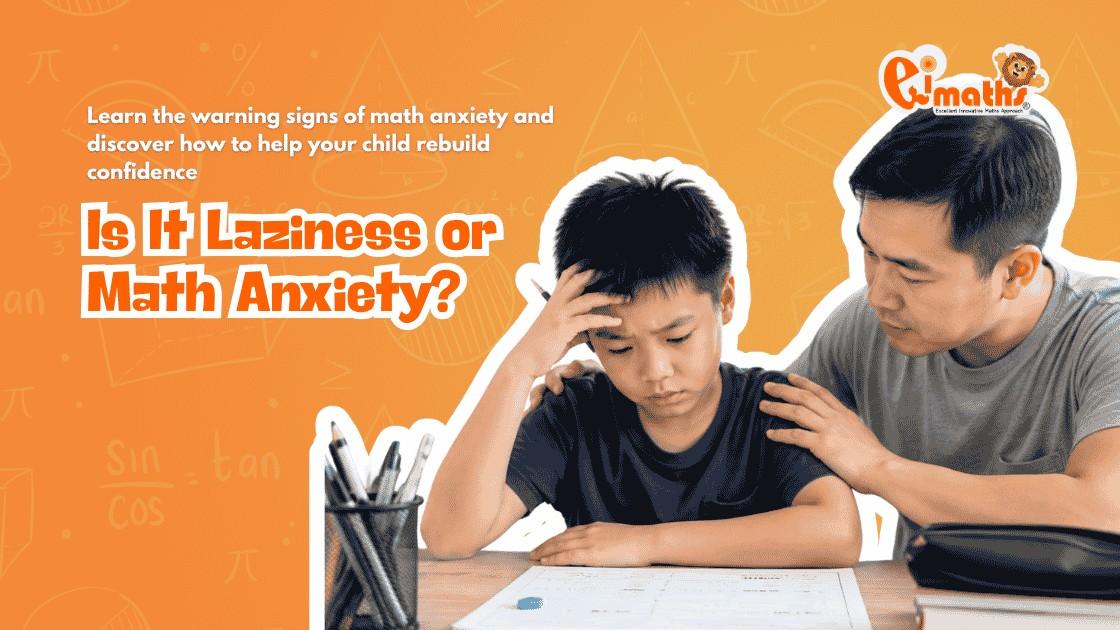
When a primary school student avoids their math homework, throws a massive tantrum at the dinner table, or takes two hours to complete a single page of simple calculations, parents often arrive at a quick conclusion. They assume their child is simply being lazy, defiant, or unfocused.
However, the real root cause behind this behavior is often far deeper and more alarming. The child might actually be suffering from a recognized psychological condition known as math anxiety.
Recognizing the subtle signs of math anxiety in children is incredibly important for parents. This condition isn’t just about disliking a subject—it is an emotional reaction that actively impairs the working memory, making it physically impossible for a child’s brain to process numbers properly.
Let us explore the major warning signs of math anxiety and outline how you can help heal your child’s relationship with education.
The 5 Red Flags of Math Anxiety
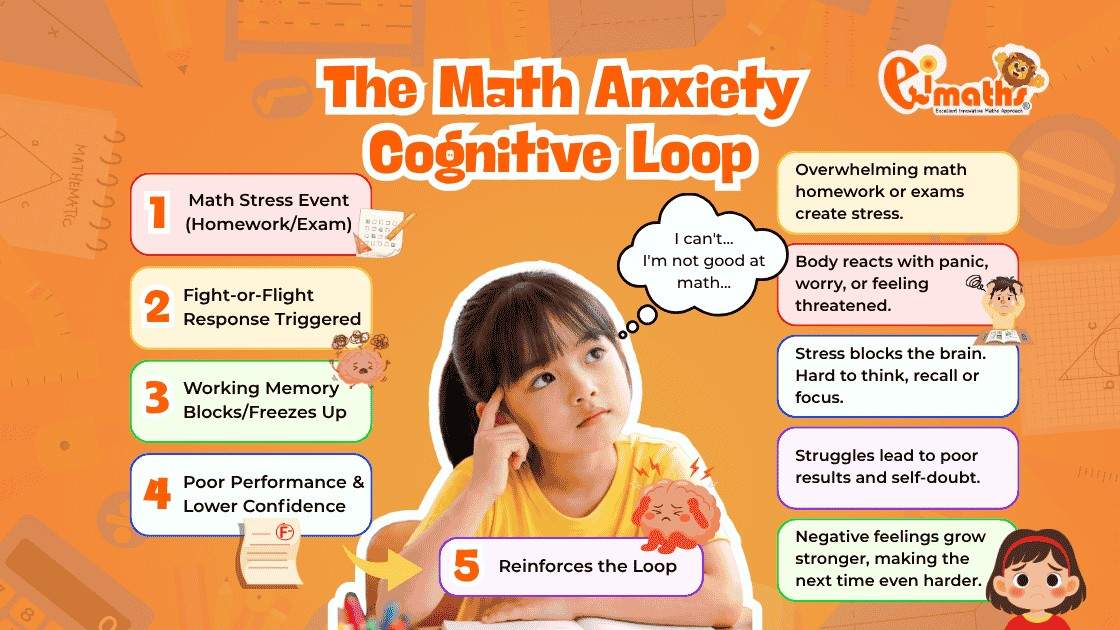
If your child is caught in this stressful cycle, they will likely exhibit several of the following behaviors:
1. Sudden Physical Symptoms Before Math Tasks
The mind and body are deeply connected. If your child frequently complains of sudden stomach aches, headaches, nausea, or sweaty palms right before a math class, during homework time, or on the morning of a school assessment, this is a genuine physical manifestation of intense psychological panic.
2. Pervasive Negative Self-Talk
Pay close attention to the specific vocabulary your child uses when discussing schoolwork. If you hear constant declarations like:
- “I am just stupid at math.”
- “My brain doesn’t work with numbers.”
- “I am never going to pass this test anyway.”
These are distinct signs of math anxiety in children. This negative mindset shows they have adopted a fixed belief that their intelligence cannot grow.
3. Intense Emotional Outbursts or Shutting Down
Crying, screaming, tearing up worksheets, or completely withdrawing into silent non-compliance are clear indicators that your child’s nervous system has entered a protective “fight-or-flight” survival mode. When this emotional flood happens, logical thinking is completely offline.
4. Advanced Avoidance and Procrastination Tactics
Does your child suddenly need to use the restroom three times, sharpen every pencil in the house, clean their entire bedroom, or ask for a snack the exact second the math textbook comes out? This level of creative procrastination is an active coping mechanism used to escape an anxiety trigger.
5. Severe Test Freezing and Memory Dropouts
Many parents note that their child can answer math questions perfectly during casual home practice, yet they completely bomb their official school exams. This sudden mental block is caused by high-stakes pressure completely overloading their working memory, causing them to temporarily forget concepts they actually know.
Actionable Steps to Reduce Math Stress at Home
If you recognize these signs of math anxiety in children, continuing to use intense drilling, loud reprimands, or long study sessions will only make the anxiety worse. You must change the emotional atmosphere surrounding the subject.
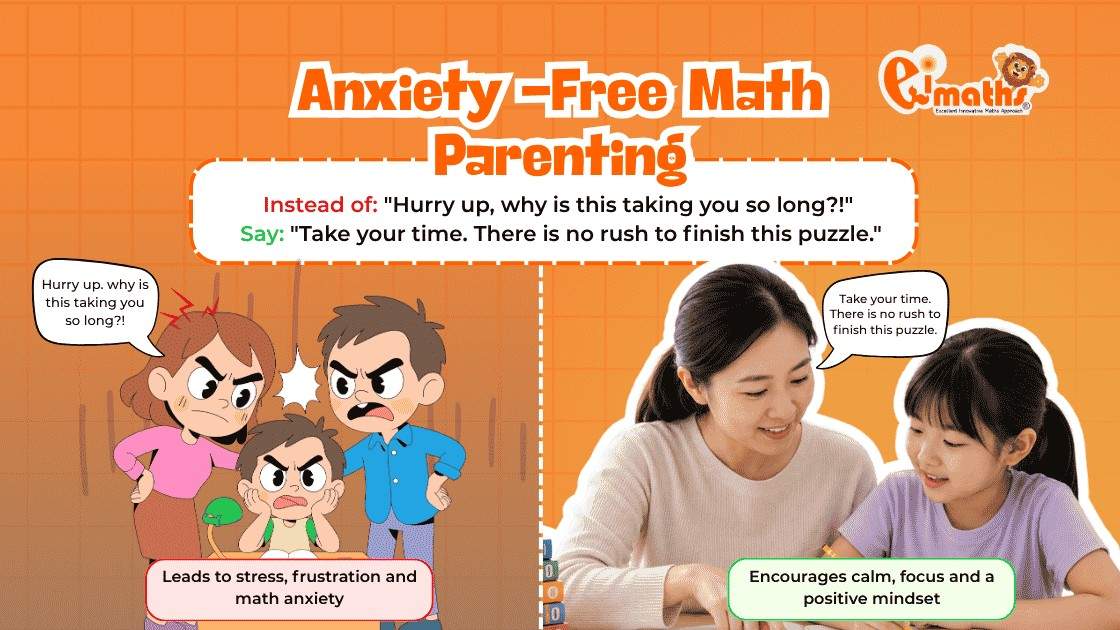
- De-emphasize Speed: Stop timing your child during practice. Speed drills cause massive stress. Focus entirely on conceptual accuracy instead.
- Praise the Effort, Not the Grade: Instead of saying “Wow, you got full marks, you are so smart!”, say “I am incredibly proud of how hard you tried on this difficult puzzle.”
- Keep Your Own Math Anxiety in Check: Children quickly pick up on parental stress. Avoid saying things like “I hated math when I was in school too” in front of your young learner.
Creating a Safe Space for Learning Meets Laughter
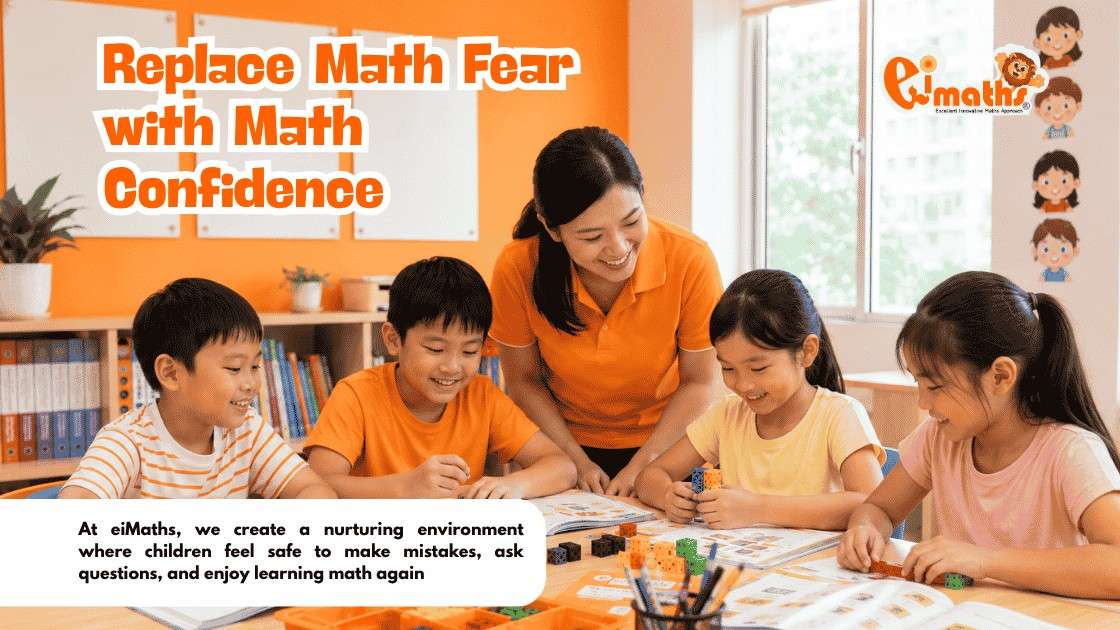
At eiMaths, our absolute priority is eliminating fear from the educational environment. We firmly believe that children learn best when they are happy, secure, and relaxed.
We maintain a strict small-class policy of just 5 to 8 students per group. This ensures a nurturing, low-pressure environment where every single mistake is celebrated as an awesome learning step.
By replacing dry, black-and-white test papers with vibrant full-color workbooks and highly engaging, hands-on activity boxes, we turn math into an enjoyable journey of discovery. Let us help you break the cycle of math anxiety and restore your child’s academic confidence today.