


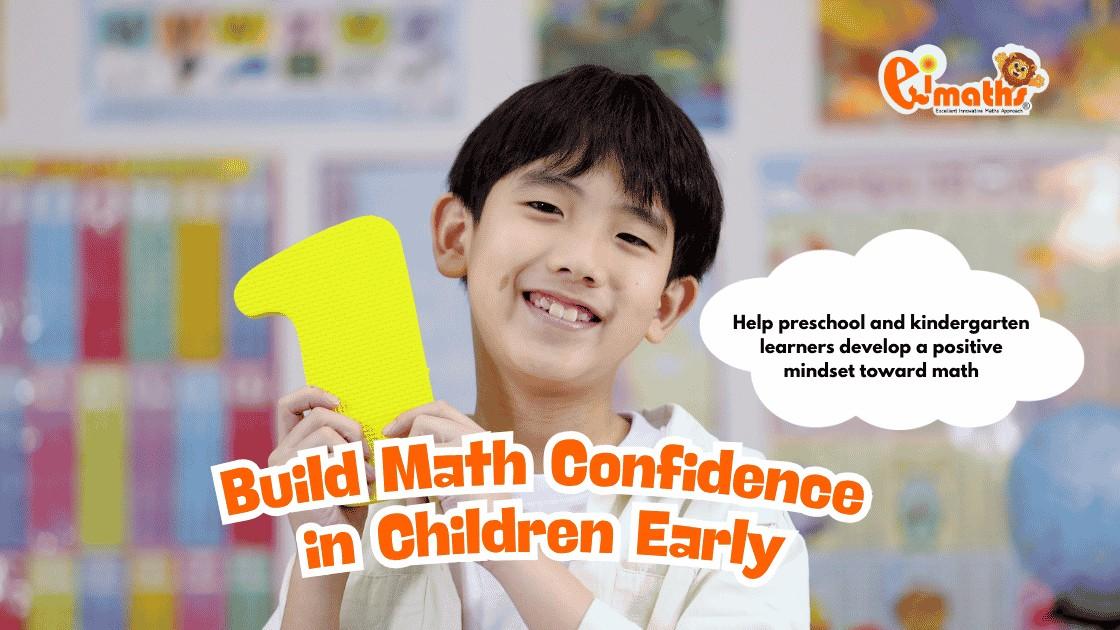
Math confidence plays a crucial role in how children approach learning mathematics. When children feel confident, they are more willing to try new problems, make mistakes, and explore different ways of thinking. On the other hand, when confidence is low, even simple math tasks can feel overwhelming.
For young learners in preschool and kindergarten, confidence matters just as much as the math skills themselves. In fact, early experiences with numbers often shape how children feel about mathematics for years to come.
The good news is that parents play a powerful role in shaping this mindset. Small everyday interactions can help children develop a positive relationship with math and build confidence step by step.
Why Math Confidence Matters in Early Childhood
In early learning stages, children are not just learning numbers. They are also forming beliefs about what they can and cannot do.
Children with strong math confidence tend to:
- Try solving problems independently
- Stay calm when facing challenges
- Enjoy exploring numbers and patterns
- Recover quickly from mistakes
- Participate actively in learning activities
When children associate math with pressure or fear, they may avoid it altogether. That is why building a positive mindset early is so important.
For preschool and kindergarten children, experiences matter more than speed or accuracy. What they feel during learning often becomes their long-term attitude toward math.
How Parents Influence Math Confidence
Parents do not need to be math experts to help their children succeed. In fact, everyday interactions are often more powerful than formal lessons.
Simple actions such as:
- Talking positively about math
- Encouraging effort instead of perfection
- Asking children how they solved a problem
- Celebrating mistakes as learning opportunities
can significantly shape a child’s confidence.
Children often mirror the attitudes of adults around them. If math feels stressful for parents, children may absorb that feeling. If math feels playful and normal, children are more likely to approach it with curiosity.
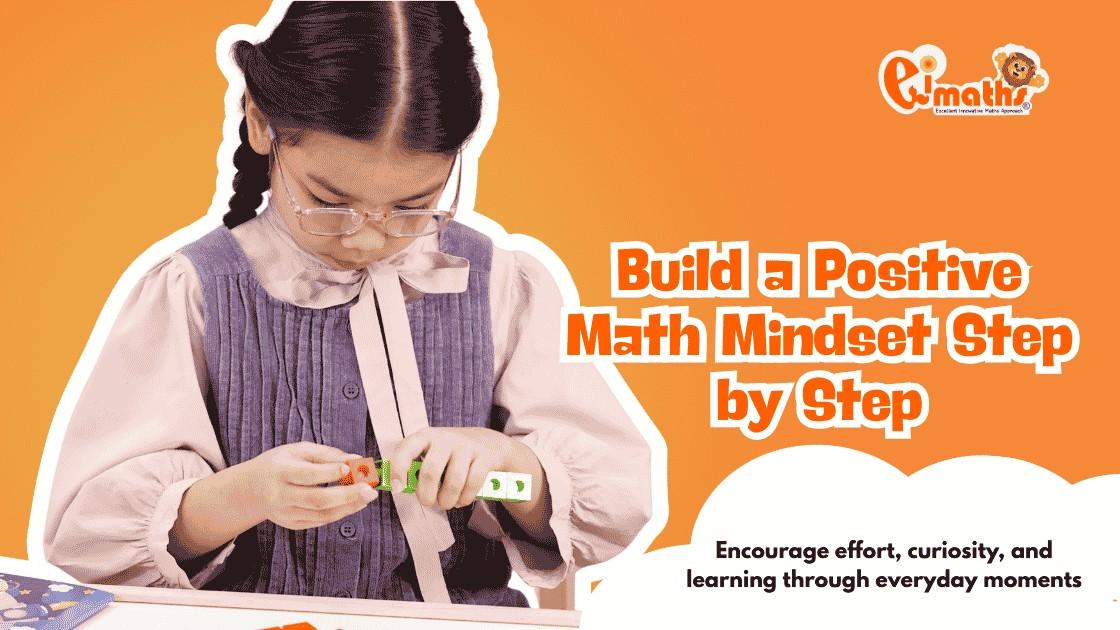
Building a Positive Math Mindset Step by Step
1. Start With Simple and Achievable Math Tasks
Children build confidence when they experience success early.
Begin with simple activities such as:
- Counting objects around the house
- Comparing quantities
- Sorting toys by size or colour
- Recognising numbers in daily life
When children feel “I can do this,” they become more open to learning harder concepts later.
2. Use Everyday Moments for Math Learning
Math does not need to feel like a formal lesson.
Parents can introduce math during everyday activities:
- Counting steps while walking
- Dividing snacks equally
- Talking about time during routines
- Measuring ingredients during cooking
These natural experiences help children understand that math exists everywhere, not just in school.
3. Focus on Effort Instead of Correct Answers
One of the most important ways to build math confidence kindergarten and math confidence preschool is by praising effort rather than outcomes.
Instead of saying:
“You got it right, good job.”
Try:
✔️ “I like how you tried a different way to solve it.”
✔️ “You didn’t give up, that’s great thinking.”
This teaches children that learning is about thinking, not just getting the right answer.
4. Give Children Time to Think
Children often feel pressured to answer quickly, especially in academic settings.
However, thinking time is essential for confidence building.
When parents wait patiently, children learn that it is okay to take time to solve problems.
This reduces anxiety and helps children develop deeper understanding instead of guessing answers.
5. Turn Mistakes Into Learning Moments
Mistakes are a natural part of learning mathematics.
Instead of correcting immediately, parents can ask:
- “What do you think happened here?”
- “Can we try another way?”
- “What did you notice?”
This approach helps children see mistakes as part of the process, not something to fear.
Over time, this builds resilience and confidence.
6. Use Positive Math Language at Home
The way adults talk about math influences how children feel about it.
Positive phrases include:
- “Let’s figure this out together”
- “That’s an interesting way to think about it”
- “Math is about trying different ideas”
- “You are improving every day”
Avoid language that creates pressure, such as:
- “This is easy, why can’t you do it?”
- “You are wrong again”
Language shapes mindset more than we often realise.
7. Keep Learning Fun and Low Pressure
For young children, play-based learning is one of the best ways to build confidence.
Games, puzzles, building blocks, and storytelling all help children engage with math in a relaxed way.
When math feels like play, children naturally become more curious and willing to explore.
What Math Confidence Looks Like in Children
A child with healthy math confidence may:
- Try solving problems without fear
- Ask questions when unsure
- Enjoy number games and activities
- Talk about math experiences
- Stay calm when facing challenges
This confidence does not happen overnight. It develops gradually through repeated positive experiences.
How Parents Can Support Math Confidence at Home
To strengthen math with confidence kindergarten and math with confidence preschool, parents can focus on:
- Creating a positive learning environment
- Encouraging exploration
- Avoiding pressure or comparisons
- Celebrating progress, not perfection
- Making math part of daily life
These small habits build a strong foundation for long-term learning success.
Conclusion: Confidence is the Foundation of Math Success
Building math confidence is not about pushing children to achieve more quickly. It is about helping them feel safe, capable, and curious while learning.
When children develop a positive math mindset early, they are more likely to enjoy learning, stay motivated, and grow into confident problem-solvers.
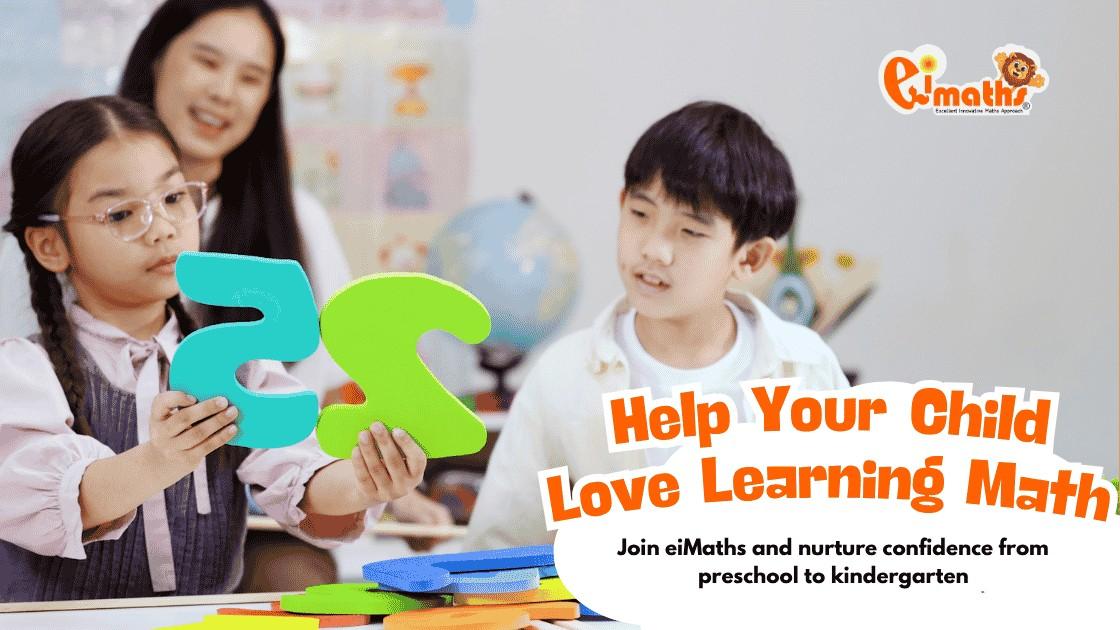
At eiMaths, we believe that every child can succeed in mathematics when they are supported with the right mindset, environment, and encouragement. Our approach focuses on building strong foundations while nurturing confidence and curiosity in every learner.
With consistent support from parents and meaningful learning experiences, children can develop not only strong math skills but also the confidence to use them in everyday life.