


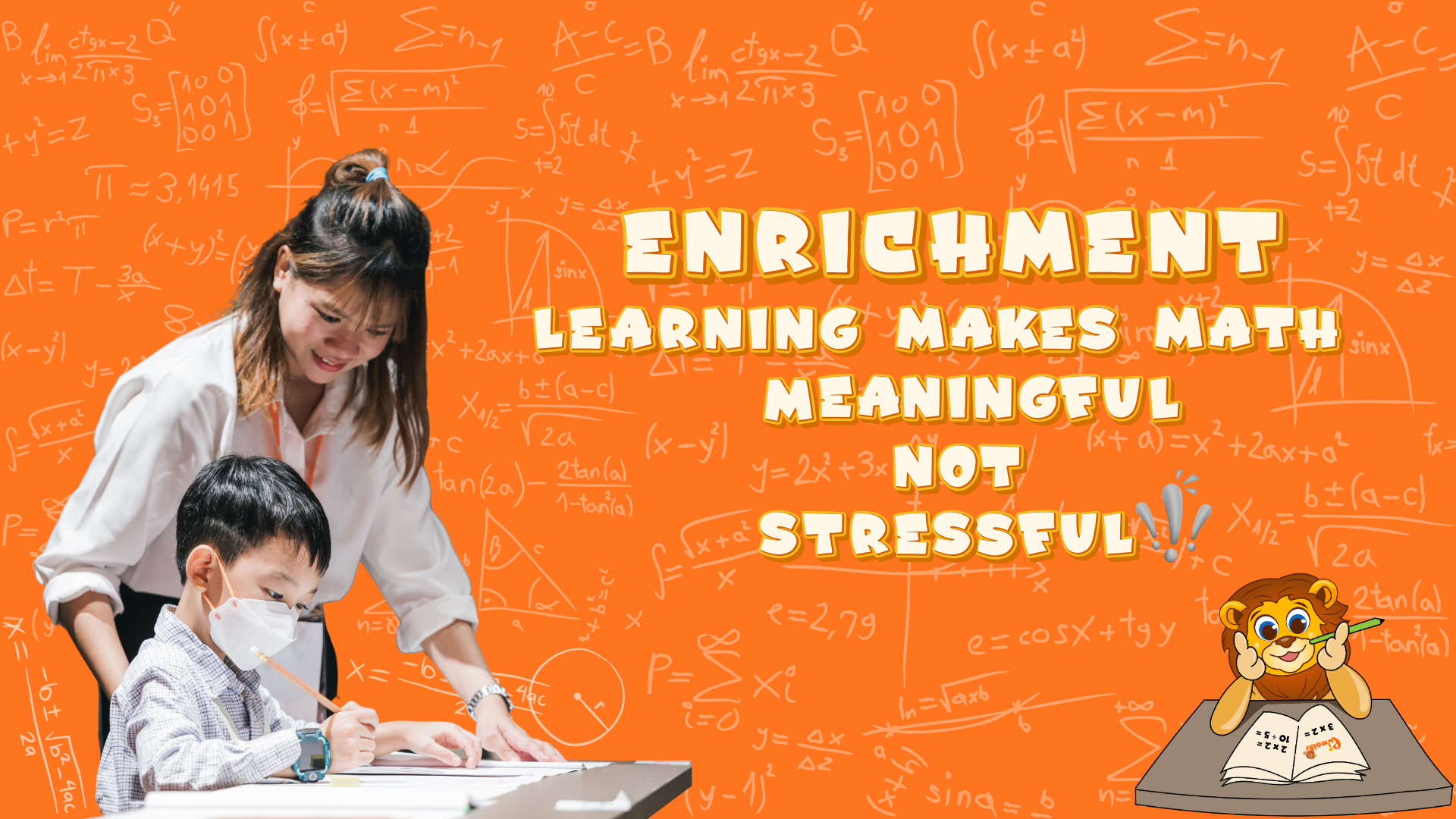
When raising a child in Singapore, it’s almost impossible not to hear about math enrichment classes. They are everywhere, from preschool to primary school, in after-school centers, weekend programs, and even online.
However, many parents wonder whether math enrichment is beneficial or detrimental. Is it helping children love math or adding more pressure to their busy days?
The truth is, it can be both. Let’s unpack this together.
What Exactly Is Math Enrichment?
Math enrichment isn’t the same as extra tuition. Rather than drilling exam papers or memorizing formulas, it helps children explore mathematical concepts through games, puzzles, and real-world problems.
Think puzzles, hands-on challenges, math games, or even simple experiments that make numbers come alive. In Singapore, popular math enrichment programs like eiMaths and S.A.M. (Seriously Addictive Mathematics) focus on building logical thinking and confidence, not just exam results.
However, enrichment today has evolved. More centers are integrating technology and real-life applications into lessons. For example, younger students may learn fractions by cooking simple recipes, while older ones explore geometry through digital design. These experiences make abstract math feel tangible and enjoyable.
The Good: How Math Enrichment Can Help Your Child
When done correctly, math enrichment can profoundly impact children aged 5-12.
- It Builds Confidence – Children often feel proud when they solve tricky puzzles or discover patterns by themselves. This sense of accomplishment helps them believe math can be fun and achievable.
- It Encourages a Love for Learning – Enrichment activities that use stories, visuals, or interactive challenges make math exciting, not scary.
- It Strengthens Problem-Solving Skills – Real-world challenges teach kids to think critically, not just memorize steps.
- It offers Personalized Learning Pace – Many programs let children learn quickly, reducing pressure and frustration.
A Channel News Asia report on high ability enrichment in Singapore highlighted that many parents value programs that promote curiosity, communication, and creative problem-solving, not just academic performance. This reflects a broader shift that enrichment should inspire thinking, not just train test-takers.
The Bad: When Math Enrichment Becomes Too Much
Of course, not every enrichment class is beneficial.
- Too Much Pressure – Some classes focus too heavily on results and competition, leading to burnout or anxiety.
- Loss of Interest – Overemphasis on drilling and memorization can make children dislike the subject.
- Mismatch with Child’s Level – When children are pushed too hard or placed in programs beyond their ability, frustration builds up quickly.
According to a feature by Today Online, many Singaporean parents are concerned about academic stress and enrichment overload.
Singapore Context
In Singapore’s achievement-focused culture, enrichment often feels like a necessity rather than an opportunity. However, the Ministry of Education (MOE) has recently emphasized learning for joy and discovery, not just grades. In its official statement, MOE shared that reducing mid-year exams and rethinking assessments helps students free up more time to explore and develop their interests, encouraging natural curiosity and well-being in learning.
This perspective aligns perfectly with the goals of effective math enrichment: to add meaning, not pressure.
So… How Do You Know What’s Right for Your Child?
Finding the right balance can be tricky, but not impossible. Here’s how parents can make better choices:
- Observe Your Child’s Reaction
Pay attention after classes. Do students look excited to share what they’ve learned, or do they look drained? Enthusiasm is an excellent sign that the class is working. - Ask About the Teaching Approach
Choose programs that prioritize hands-on learning and real-world exploration over endless worksheets. - Talk About Learning, Not Just Grades
Instead of asking, “What score did you get?” try asking, “What new thing did you discover today?” This shifts the focus from performance to growth. - Find a Healthy Rhythm
One or two sessions a week are plenty for most children. Remember: downtime fuels creativity and deeper understanding. - Communicate with Teachers
Your child’s school teachers can often suggest whether enrichment is necessary or if confidence and practice at home would be enough.
Expert Tip: It’s About the Journey
Mathematics is about understanding. Children who grasp why things work tend to perform better long-term and have greater creativity and confidence.
As enrichment trends continue evolving in Singapore, the best results come from a balance of structured learning, open exploration, and genuine joy in discovery.
Conclusion to …
So, is math enrichment good or bad?
It depends on your child, the program, and its approach.
When done thoughtfully, math enrichment can build confidence, curiosity, and creativity. When overdone, it can cause unnecessary stress and burnout.
The goal isn’t to raise math geniuses overnight, but to nurture joyful, resilient learners one number and one “aha!” moment at a time.
At eiMaths, we believe every child can excel when learning is joyful, meaningful, and rooted in understanding. That’s the foundation of lifelong mathematical success. If you’re looking for a reputable math enrichment program to build your kid’s math confidence and life-long learning habits, try eiMaths at any of their 14 math enrichment centres across Singapore.