


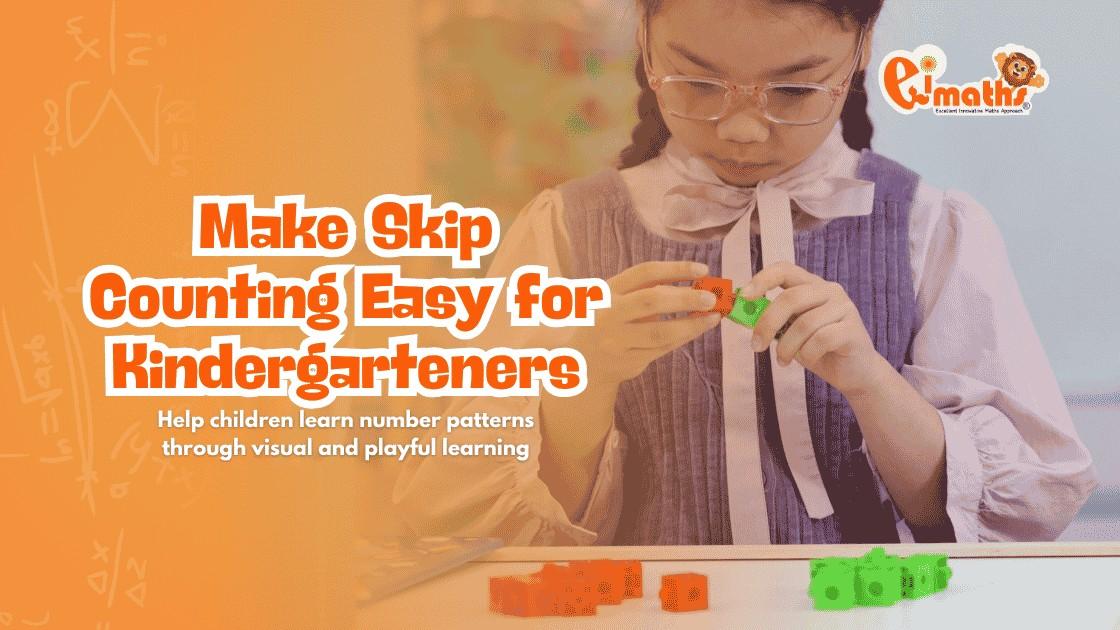
Skip counting is an important early numeracy skill, and understanding how to teach skip counting for kindergarten children can significantly strengthen their number sense and prepare them for more advanced math concepts such as multiplication and patterns. At this stage, children are not just learning to count sequentially, but also beginning to recognise structure and repetition within numbers.
For kindergarteners, skip counting is often their first exposure to mathematical patterns. Instead of counting by ones, they learn to count by twos, fives, or tens. This helps them understand that numbers can “move in groups,” which later becomes essential for arithmetic fluency. However, introducing skip counting too quickly or in a purely memorisation-based way can confuse young learners. That is why the approach must be playful, visual, and highly interactive.
Early math learning should always feel meaningful, not mechanical. When children enjoy the process, they are more likely to develop confidence and long-term interest in mathematics.
Understanding Skip Counting in Early Childhood
Before diving into teaching strategies, it is important to understand what skip counting actually represents for young learners. At its core, skip counting is about recognising equal intervals between numbers. Instead of counting 1, 2, 3, 4, children learn to count 2, 4, 6, 8 or 5, 10, 15, 20.
At the kindergarten level, this concept is abstract. Therefore, it must be grounded in physical objects and repeated visual patterns. Children need to see and touch the “groups” they are counting.
This is where structured exposure becomes important. Educators often begin with real-world grouping before introducing verbal repetition.
Why Skip Counting Matters for Kindergarteners
Skip counting is not just a memorisation skill; it builds the foundation for later mathematical thinking. It helps children develop:
- Pattern recognition skills
- Early multiplication readiness
- Stronger number sense
- Mental math efficiency
- Logical thinking and sequencing
More importantly, it allows children to understand that numbers are structured and predictable, not random.
Understanding skip counting strategies at this stage ensures that children do not rely solely on rote memorisation. Instead, they begin to see relationships between numbers, which is critical for long-term math success.
Effective Ways to Introduce Skip Counting
Introducing skip counting should be gradual and highly visual. Children need repeated exposure through different contexts before they can internalise the concept.
One effective approach is grouping physical objects. For example, teachers can group buttons, blocks, or toys into sets of two or five and encourage children to count each group aloud.
Another approach is using rhythm. Children naturally respond well to songs, clapping, and movement-based repetition. When skip counting is embedded in rhythm, it becomes easier to remember.
Educators can also use number lines and visual charts to reinforce patterns. Seeing numbers arranged in equal intervals helps children connect abstract counting to concrete structure.
How to Teach Skip Counting for Kindergarten Through Play
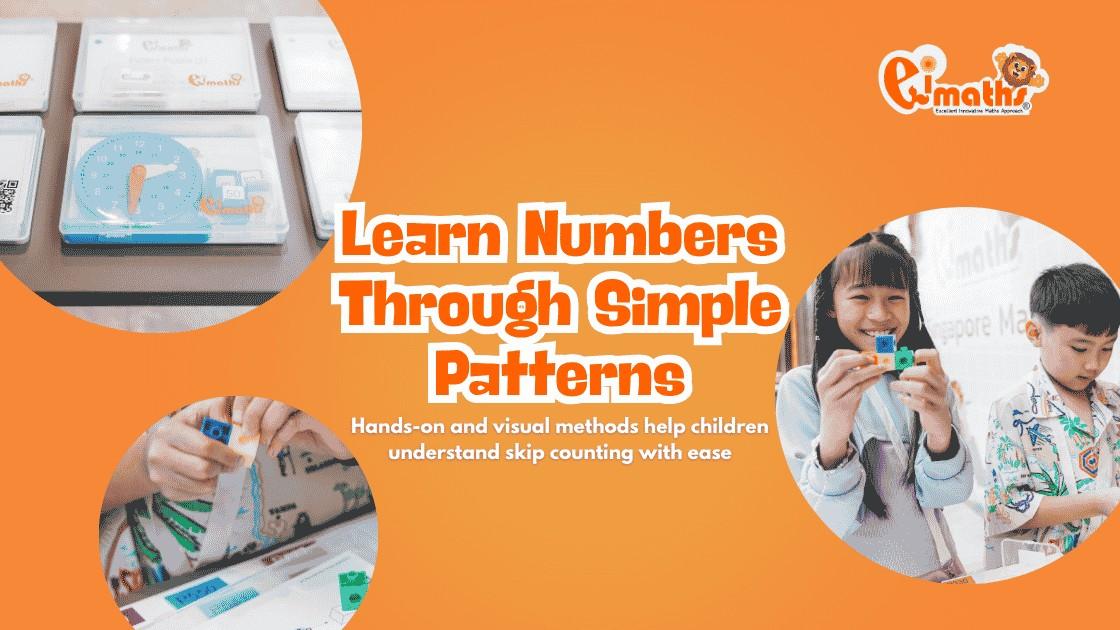
Play-based learning is one of the most effective methods for teaching early mathematics. When children are engaged in play, they are more relaxed and more willing to explore new concepts.
A practical example is setting up a pretend market. Children can group items in twos or fives and “sell” them to friends. This helps them understand skip counting in a real-life context.
Games involving jumping, stepping, or hopping on numbered mats also help reinforce the concept through movement. Each jump can represent a skip in counting, making abstract ideas more physical and memorable.
By embedding math into play, children do not feel pressured to learn, they naturally absorb the concepts through repetition and enjoyment.
Common Skip Counting Methods for Kindergarteners
There are several approaches educators can use depending on the child’s learning style. The table below summarises some commonly used methods:
| Method | Description | Learning Benefit |
| Visual grouping | Using objects grouped in equal sets | Builds concrete understanding of quantity |
| Rhythm-based learning | Clapping or singing patterns | Improves memory and engagement |
| Number lines | Visual representation of equal jumps | Strengthens pattern recognition |
| Movement activities | Jumping or stepping in intervals | Enhances physical and cognitive connection |
| Story-based learning | Embedding numbers in narratives | Improves comprehension and interest |
Counting Activities Skip Counting Strategies for Engagement
One of the most effective ways to strengthen understanding is through structured repetition combined with creativity. Well-designed counting activities skip counting strategies often include games, storytelling, and sensory experiences.
For example, teachers can ask children to count groups of five candies, then gradually transition to counting by fives without the physical objects. Another activity involves using animal cards where each animal represents a fixed number, encouraging children to calculate totals through grouping.
These strategies help bridge the gap between concrete and abstract thinking, which is essential at the kindergarten level.
Skip Counting Examples in Everyday Learning
Children learn best when they can connect mathematics to familiar situations. Real-life skip counting examples can make the concept more relatable and easier to understand.
For instance, while arranging chairs, children can count by twos as they place them in pairs. During snack time, they can count grapes in groups of five. Even walking up stairs can become a skip counting exercise if each step represents a number in a pattern.
These everyday experiences reinforce that mathematics exists beyond worksheets and classrooms.
How to Help Kindergartener with Math Confidence
Many children struggle with math not because they lack ability, but because they lack confidence. Understanding how to help kindergartener with math involves creating a supportive learning environment where mistakes are seen as part of learning.
Encouragement plays a key role. Instead of correcting immediately, adults can guide children to self-correct by asking simple questions like “Does this group have the same number as the last one?” or “What comes next in the pattern?”
Consistency is also important. Short, frequent practice sessions are more effective than long, overwhelming lessons. When children experience success repeatedly, their confidence naturally increases.
Building Strong Foundations Through Patterns
Skip counting is ultimately about recognising patterns in numbers. Once children become comfortable with patterns, they begin to understand more advanced concepts such as multiplication and division without fear or confusion.
At this stage, children are not expected to master formal arithmetic. Instead, the goal is to help them see mathematics as structured, logical, and enjoyable.
Educators and parents should focus on reinforcing curiosity rather than speed or perfection.
Conclusion: Learning Math Through Exploration and Joy
Skip counting is a powerful stepping stone in early mathematics development. When taught effectively, it helps children move beyond simple memorisation and begin recognising meaningful number relationships.
By combining visual tools, movement, play, and real-life examples, children can develop a deeper understanding of patterns and numbers. More importantly, they learn that math is not something to fear, but something to explore.
At eiMaths, we believe that early mathematics should be engaging, interactive, and confidence-building. Through structured yet playful learning experiences, children are encouraged to explore numbers in meaningful ways and develop strong foundational skills that support their long-term academic journey.
With the right guidance, every child can learn not only how to count, but also how to think mathematically with curiosity and confidence.