


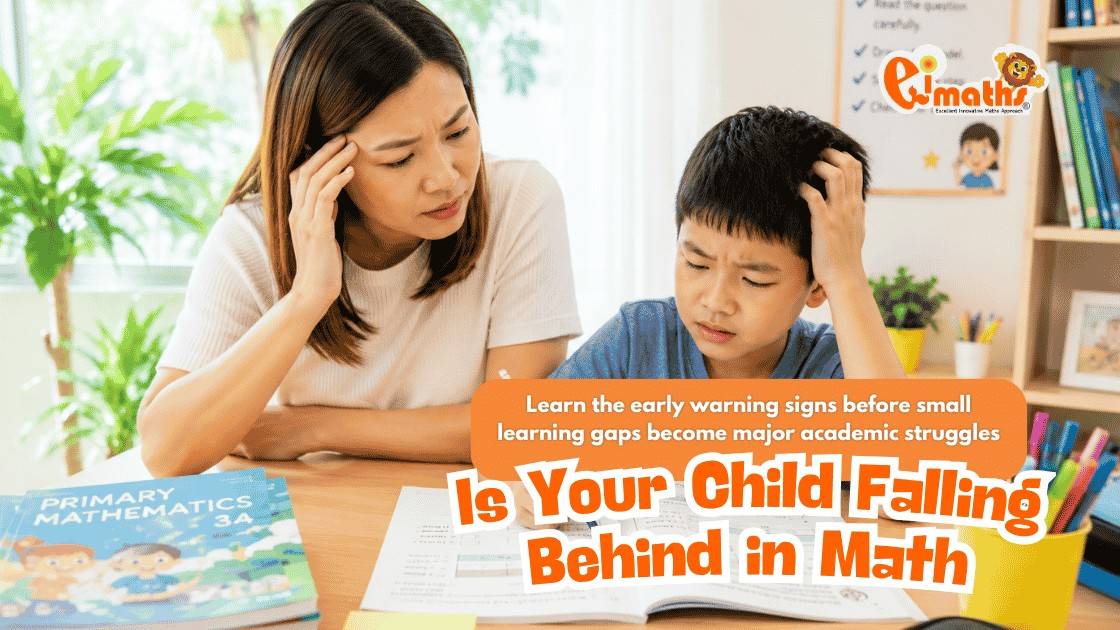
In a fast-paced educational environment like Singapore, it is remarkably easy for a student to hit a quiet roadblock in their studies. Because math is a highly cumulative subject—where every new topic builds directly on the previous one—a single misunderstanding can quickly snowball into a massive learning gap. Recognizing if your child falling behind in math early is crucial to preventing them from losing academic confidence.
Many parents only realize there is an issue when the holistic assessment reports or exam grades come back. However, long before a child fails a test, they display subtle behavioral changes at home.
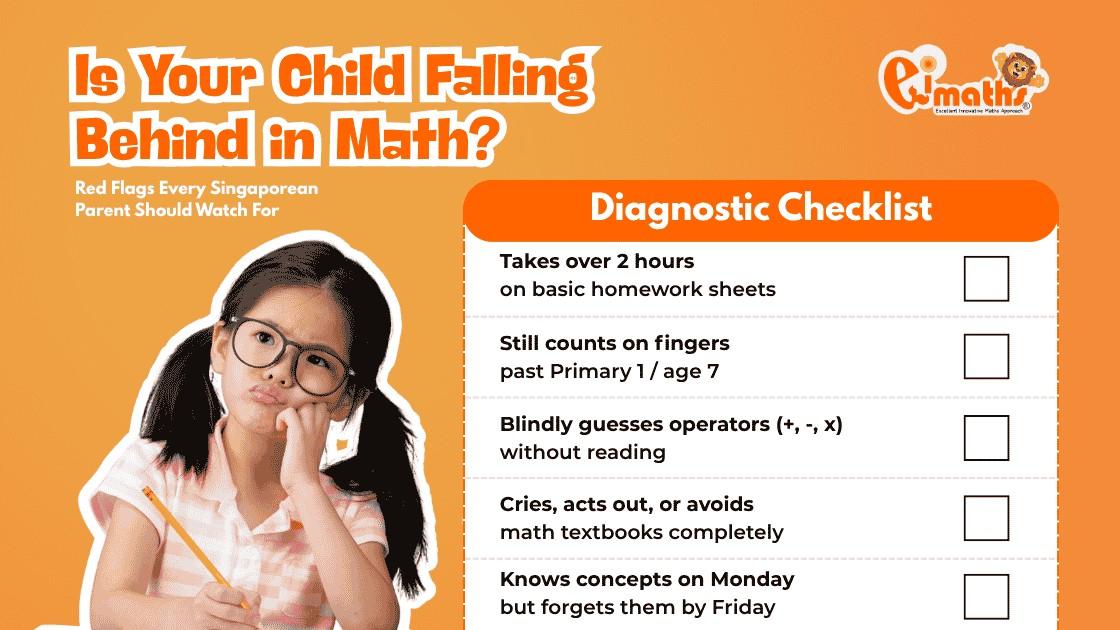
Decoding the Warning Signs
If you checked off more than two options above, your child is likely struggling beneath the surface. Let’s break down why these warning signs matter:
1. Weakness in Core Number Sense
While using fingers is completely normal in Kindergarten and early Primary 1, a child in Primary 2 or 3 should have a strong mental grasp of basic number bonds. If they are still heavily relying on counting fingers for simple addition or subtraction, it indicates they lack concrete visual math foundations.
2. Blind Guessing Dynamics
Does your child fly through their homework but get almost every question wrong? If they are writing down random numbers or guessing operations without reading the problem text, it means they find the conceptual level too difficult and have mentally checked out.
3. The Short-Term Memory Trap
If your child masters a topic like fractions on Monday but completely forgets how to execute it by the following Saturday, it means the concept was only processed via short-term rote memorization, rather than true logical understanding.
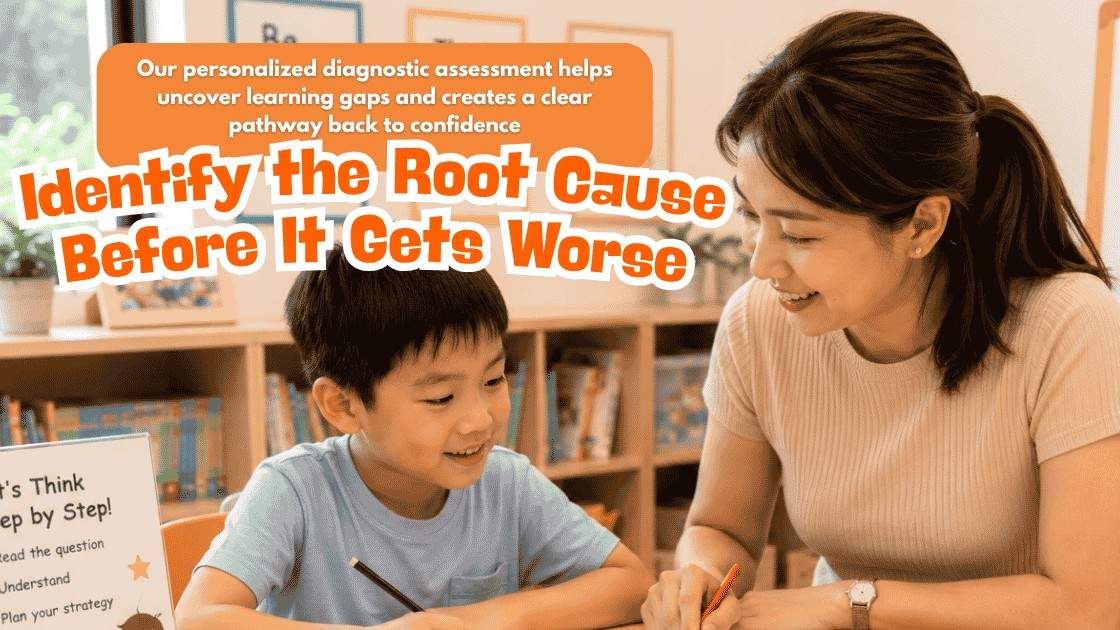
How to Safely Bridge the Learning Gap
If you notice these red flags, do not panic and do not resort to heavy reprimands or endless practice drills. Pushing a struggling child too hard will only cause them to shut down completely.
Instead, the solution is to find exactly where the foundation cracked. At eiMaths, we provide every new student with a thorough, personalized diagnostic assessment. This test doesn’t just look at their current grade—it pinpoints the exact conceptual gap that is causing your child falling behind in math.
With our small class sizes of 5 to 8 students, our experienced teachers can customize activities to match your child’s specific learning speed, gently guiding them back to peer level and restoring their love for learning.