


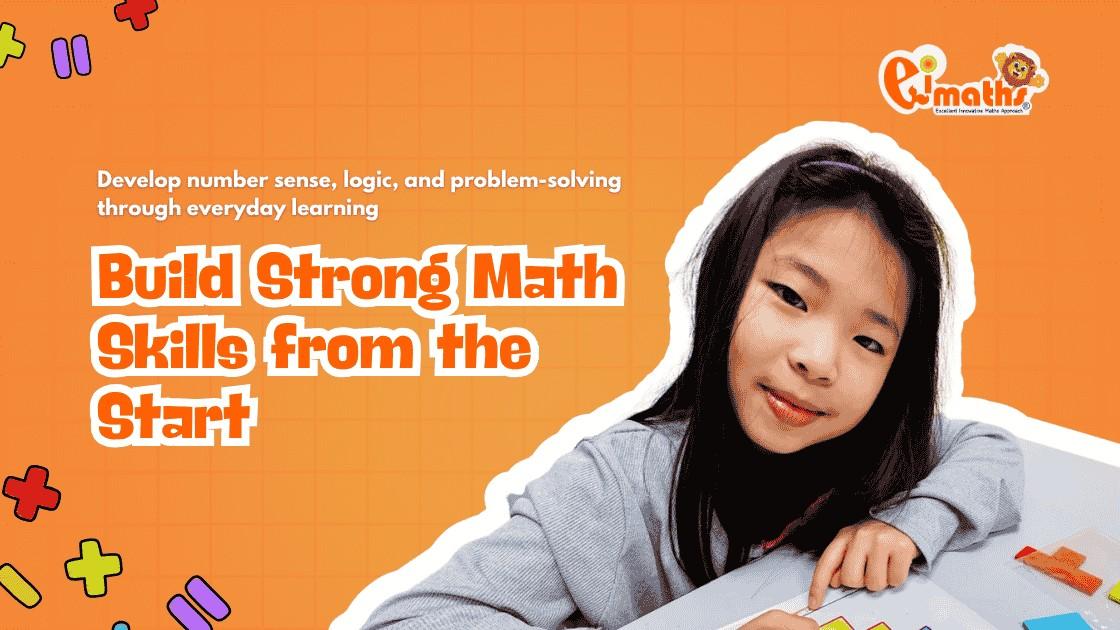
Building math skills in children starts long before they encounter complex equations or formal assessments in school. The early years provide a critical opportunity to develop number sense, logical thinking, and problem-solving abilities that will support learning throughout a child’s academic journey. While many parents focus on helping children memorise facts or complete worksheets, strong mathematical foundations are built through meaningful experiences, exploration, and consistent practice.
Mathematics is more than learning how to calculate answers. It involves recognising patterns, understanding relationships, making predictions, and applying logic to everyday situations. When children develop these skills from an early age, they are more likely to approach math with confidence and curiosity.
The good news is that parents and educators do not need specialised training to support early math development. Many opportunities for learning can be found in everyday activities, play experiences, and simple conversations about numbers and quantities.
Why Foundational Math Skills Matter
Strong foundational math skills serve as the building blocks for future learning. Children who understand basic mathematical concepts often find it easier to grasp more advanced topics later in school.
Foundational skills include:
- Number recognition
- Counting and quantity understanding
- Pattern recognition
- Sorting and classification
- Measurement concepts
- Spatial awareness
- Problem-solving skills
These concepts help children understand how mathematics works rather than simply memorising procedures.
Research consistently shows that early mathematical understanding is linked to later academic achievement. Children who enter school with strong number sense and reasoning abilities are often better prepared to tackle increasingly complex mathematical challenges.
Creating a Positive Relationship with Mathematics
One of the most effective strategies for supporting math development is helping children view mathematics as enjoyable and accessible.
Many adults unintentionally communicate anxiety about math. Statements such as “I was never good at math” can influence how children perceive their own abilities. Instead, it is helpful to encourage a growth mindset by emphasising that mathematical skills develop through practice and persistence.
Children benefit from hearing messages such as:
- Mistakes help us learn.
- There are different ways to solve a problem.
- Practice makes our thinking stronger.
- Learning math takes time.
When children feel safe exploring ideas without fear of failure, they become more willing to engage with challenging concepts.
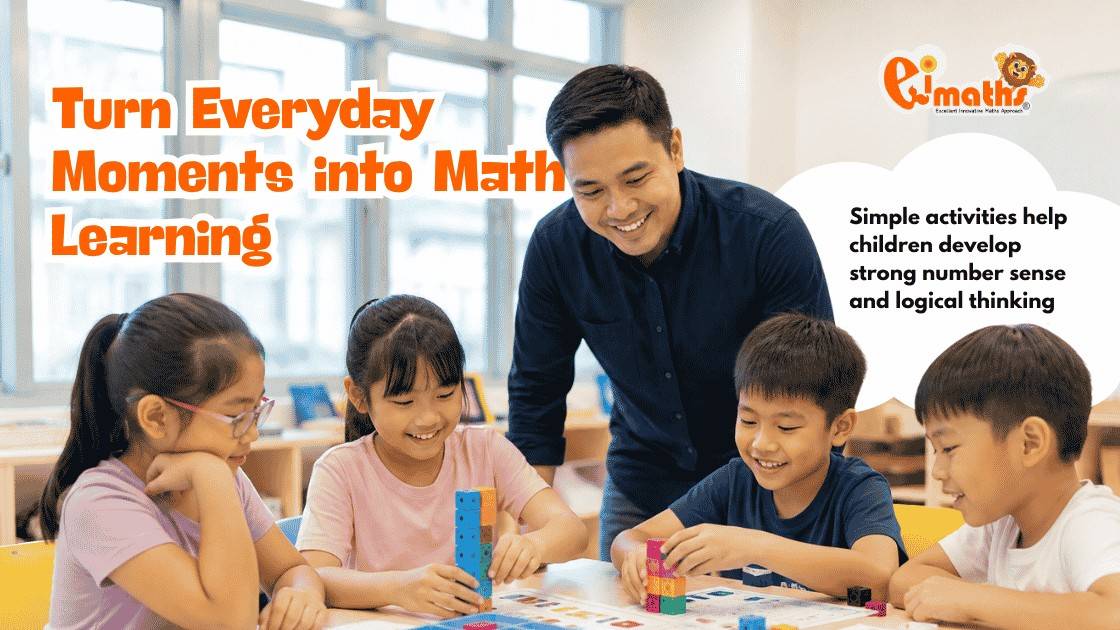
Building Math Skills Through Everyday Activities
One of the most powerful ways to support learning is by integrating math into daily routines.
Children naturally encounter mathematical concepts throughout the day. Parents can help make these connections visible by asking simple questions and encouraging observation.
For example:
- Counting pieces of fruit during snack time
- Comparing the sizes of different objects
- Measuring ingredients while cooking
- Sorting toys by colour or shape
- Discussing patterns found in nature
These experiences help children understand that mathematics is a practical tool rather than a subject that exists only in school.
The more children see math applied in real situations, the more meaningful and memorable it becomes.
Encouraging Problem-Solving and Critical Thinking
Strong mathematical foundations depend on more than number knowledge alone. Children also need opportunities to think critically and solve problems independently.
Instead of immediately providing answers, adults can guide children through the thinking process by asking questions such as:
- What do you notice?
- Can you think of another way?
- How did you figure that out?
- What might happen next?
These conversations encourage reasoning and help children develop confidence in their own thinking.
Problem-solving activities can be incorporated into games, puzzles, building projects, and everyday situations. The goal is to help children understand that mathematics involves exploration and decision-making.
The Role of Play in Mathematical Development
Play is one of the most effective learning tools available to young children. Through play, children experiment, test ideas, and discover patterns naturally.
Activities such as building with blocks, completing puzzles, and playing board games provide valuable opportunities to develop mathematical thinking.
The table below highlights how different play activities support foundational math development.
|
Activity |
Mathematical Skills Developed |
|
Building blocks |
Spatial awareness, measurement, problem-solving |
|
Board games |
Counting, number recognition, sequencing |
|
Puzzles |
Pattern recognition, logical thinking |
|
Sorting games |
Classification, comparison, categorisation |
|
Pretend shopping |
Counting, money concepts, decision-making |
|
Construction toys |
Geometry, estimation, reasoning |
These activities allow children to engage with mathematical concepts in an enjoyable and low-pressure environment.
Supporting Number Sense Development
Number sense is one of the most important components of early mathematical learning. It refers to a child’s ability to understand numbers, quantities, and relationships.
Children with strong number sense can:
- Recognise quantities without counting every object
- Compare groups of objects
- Understand more and less
- Identify number patterns
- Estimate amounts
Developing number sense requires repeated exposure to numbers in meaningful contexts.
Parents can support this by encouraging counting during everyday activities and discussing numerical relationships whenever opportunities arise.
This gradual process contributes significantly to building basic math skills that children will rely on throughout their education.
Making Learning Visual and Hands-On
Young children often learn best when they can see and manipulate objects. Visual and hands-on experiences make abstract concepts easier to understand.
Common learning tools include:
- Counting cubes
- Number cards
- Pattern blocks
- Beads
- Measuring cups
- Shape manipulatives
These resources help children connect mathematical ideas with physical experiences.
For example, using blocks to represent quantities can help children understand addition and subtraction before they encounter written equations.
Hands-on learning encourages deeper understanding and supports long-term retention.
Developing Consistency Without Pressure
Consistency plays an important role in learning. However, consistency does not mean lengthy lessons or excessive practice.
Short, regular opportunities to engage with mathematics are often more effective than occasional intensive sessions.
Parents can support learning by:
- Reading books that include mathematical concepts
- Playing counting games during travel
- Asking simple math questions throughout the day
- Encouraging curiosity about patterns and measurements
The objective is to make mathematics a natural part of daily life rather than a separate task.
Over time, these small experiences accumulate and contribute significantly to building math skills in a way that feels enjoyable and sustainable.
Looking Beyond Correct Answers
Children sometimes believe that mathematics is only about finding the right answer. While accuracy is important, the thinking process is equally valuable.
Encouraging children to explain their reasoning helps strengthen understanding and communication skills.
When adults focus on effort, strategy, and persistence rather than speed, children are more likely to develop resilience and confidence.
A strong mathematical foundation is built not only through knowledge but also through positive learning habits and attitudes.
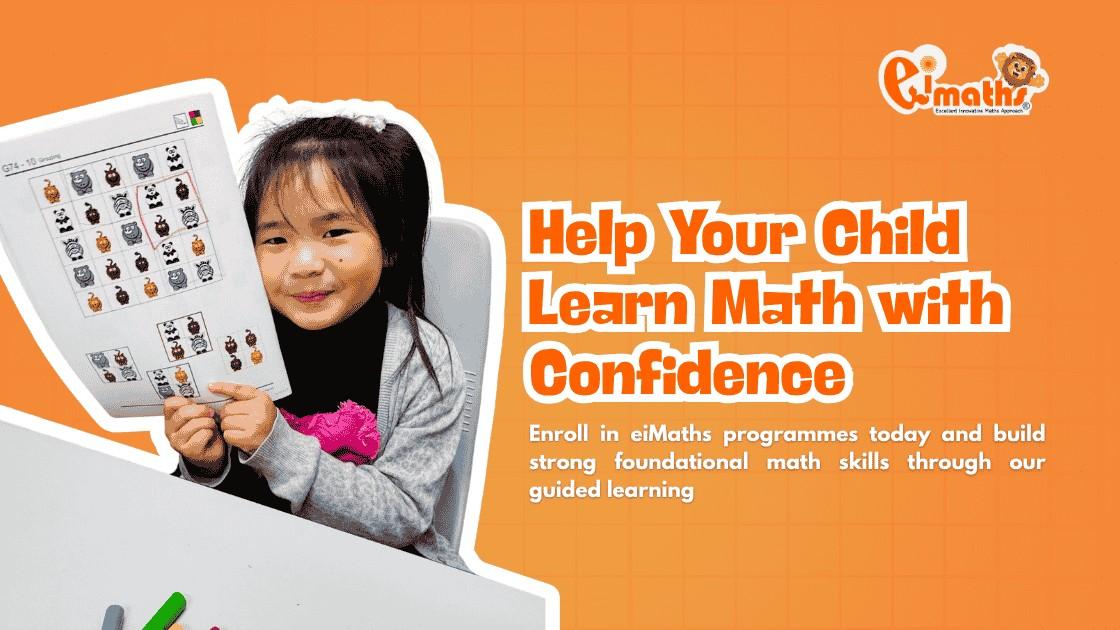
Conclusion: Helping Children Grow Into Confident Learners
Building a strong foundation in mathematics is one of the most valuable gifts parents and educators can provide. Early experiences with numbers, patterns, measurement, and problem-solving help children develop the confidence and skills needed for future success.
By incorporating mathematics into everyday life, encouraging exploration, and creating positive learning experiences, adults can help children develop both competence and curiosity. The goal is not simply to prepare children for exams, but to help them become confident thinkers who can apply mathematical reasoning in a variety of situations.
At eiMaths, we believe that meaningful learning happens when children actively engage with mathematical concepts through exploration, discovery, and guided practice. Our programmes are designed to nurture strong foundational understanding while helping children build confidence, resilience, and a genuine appreciation for mathematics.
With the right support and encouragement, every child can develop the skills and mindset needed to succeed in math and beyond.