


When a child begins to bring home poor grades, parents naturally feel a deep sense of worry. The immediate reaction is often to blame external factors: “They are spending too much time on screens,” “They aren’t studying hard enough,” or “They just lack focus.” However, educational psychology reveals that these surface-level behaviors are rarely the core causes of academic failure in students.
To truly help a struggling child, we must look many layers deeper than just their test scores. Let us explore the primary structural reasons behind academic struggles and how to build a pathway back to success.
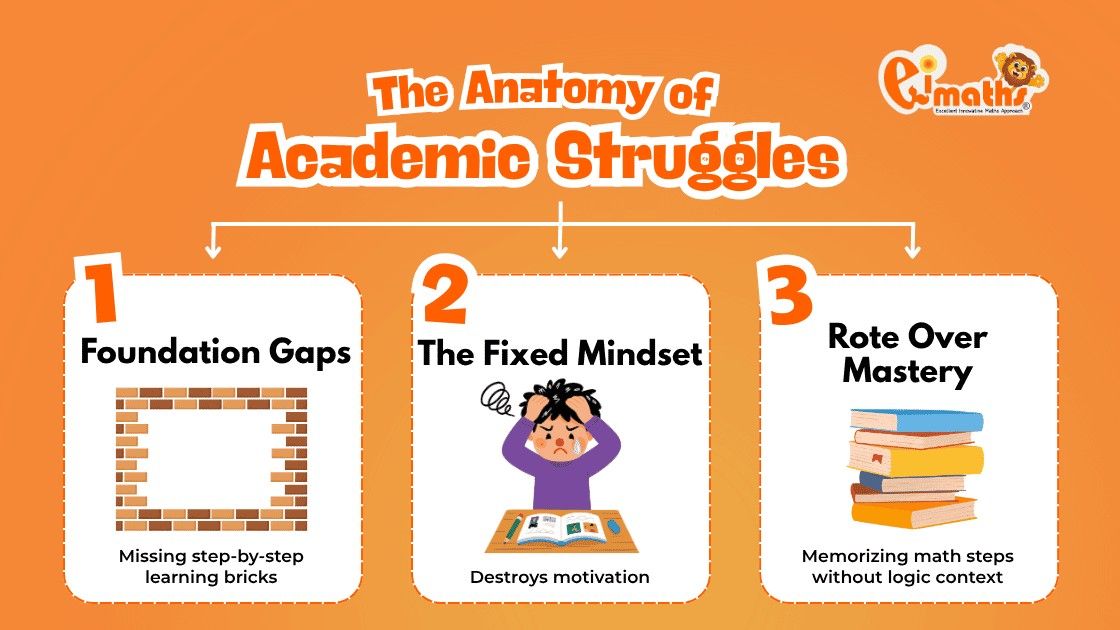
The 3 Pillars of Learning Failure
Let’s dissect the primary underlying causes of academic failure in students that traditional classrooms often ignore:
1. The Accumulation of Unresolved Learning Gaps
The single most common cause of academic decline is a cracked foundational base. Education is like building a brick tower; if the foundation row is missing bricks, the tower will eventually collapse as it grows taller. In cumulative subjects like mathematics, a student who fails to master basic number sense early on will find complex topics down the line completely impossible.
2. A Fixed Mindset and Fear of Failure
When students experience repeated academic setbacks without proper support, they often develop a “fixed mindset.” They begin to believe that intelligence is an unchangeable trait. Phrases like “I am just not a math person” are clear signs of this shift. This psychological block causes children to stop trying altogether out of fear of confirmation that they aren’t smart.
3. Rote Learning Over Conceptual Mastery
Many children survive early primary school by simply memorizing formulas and patterns. However, modern educational syllabi—especially in Singapore—are carefully designed to test application and critical thinking.
📊 Long-Term Impact Matrix
| Feature | Rote Learning Tracking | Conceptual Mastery Tracking |
| Primary 1-2 Performance | High Grades (Simple recalls) | High Grades (Deep understanding) |
| Primary 3-6 Performance | Major Drop (Cannot handle heuristics) | Consistent growth & steady scores |
| Exam Stress Level | Extremely High Panic | Calm Problem-Solving mindset |
| Independent Study | Needs constant parent assistance | Can solve complex questions alone |
Breaking the Cycle of Failure
To reverse academic struggles, parents must shift their approach from high-pressure drilling to constructive, confidence-building strategies.
- Target the Root Gap: Stop focusing solely on the upcoming exam. Instead, look back at previous topics to fix the exact concepts your child missed.
- Praise Growth, Not Marks: Focus your praise on your child’s effort and logical thinking rather than their raw scores.
- Make Learning Active: Move away from dry textbooks and incorporate hands-on tools to make abstract concepts tangible.
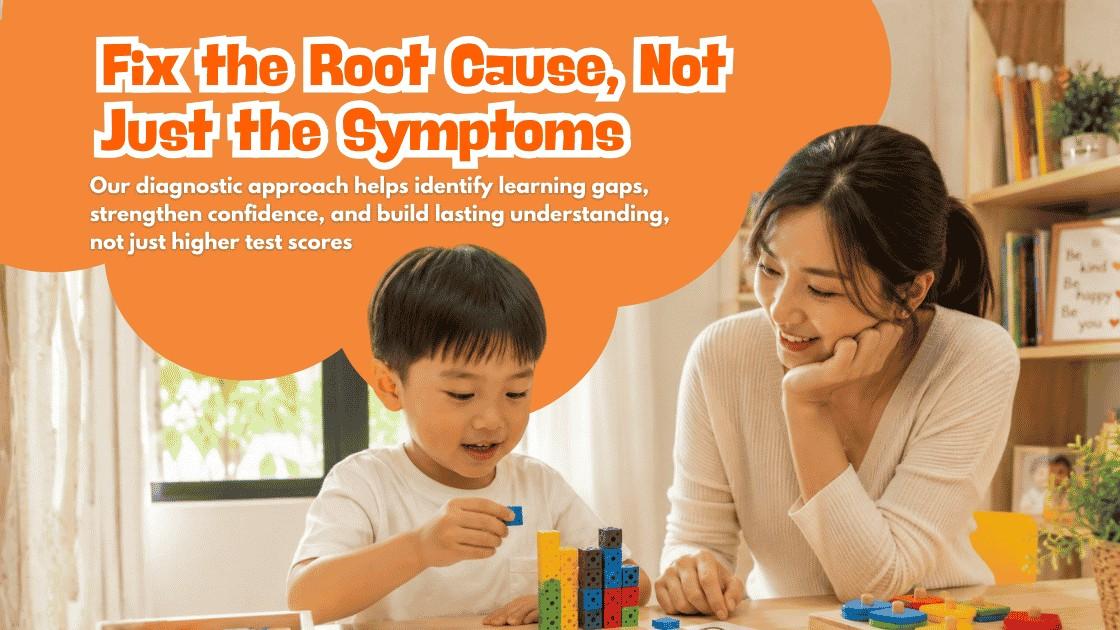
Turning Academic Struggles into Success
At eiMaths, we specialize in identifying and resolving the primary causes of academic failure in students. We completely reject high-stress, repetitive test drilling. Instead, our diagnostic assessments find exactly where your child’s learning foundation needs reinforcement.
By utilizing interactive activity boxes and keeping our class sizes down to 5–8 students, we provide a safe, nurturing environment where mistakes are treated as natural steps toward mastery. Let us help your child break free from academic stress and discover the joy of genuine understanding.