Raising a child within Singapore’s highly competitive, world-class educational system can feel like walking a stressful tightrope. As a loving parent, you want to give your child every possible headstart to thrive academically. At the same time, you want to protect their precious childhood and avoid causing early academic burnout.
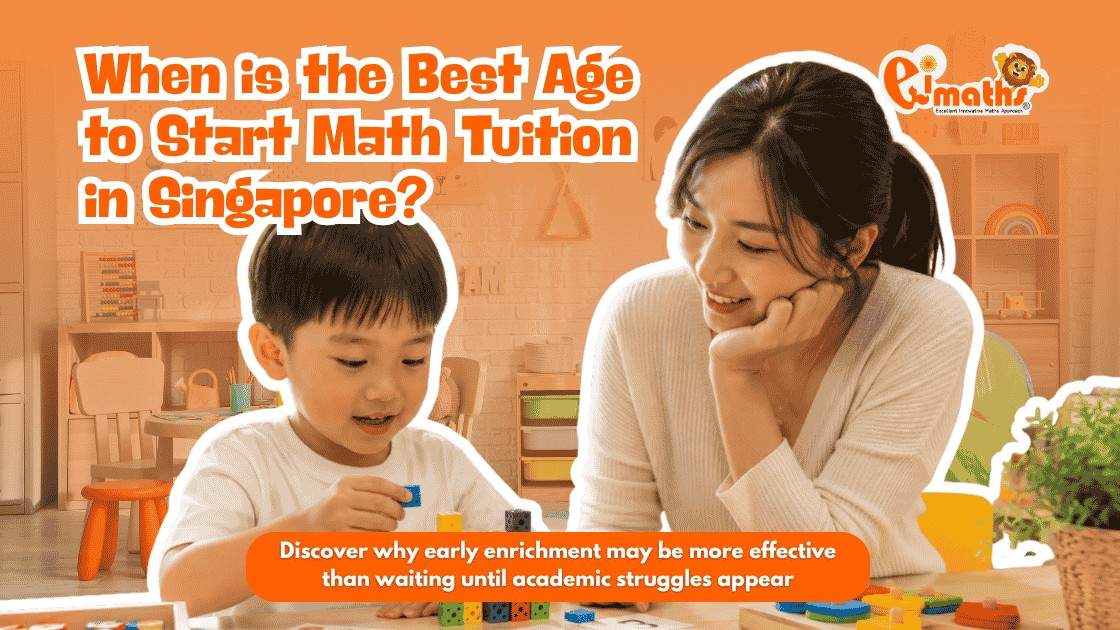
This brings families to a very common, stressful crossroads: when to start math tuition in Singapore for your child?
Historically, parents waited until a child hit an academic wall—usually around Primary 3 or 4 when grades suddenly drop—before scrambling to find an emergency tutor. However, in the modern educational landscape, a reactive approach is often too late.
Let us explore why a proactive approach to mathematics is far superior, and look at the ideal age to introduce structured math guidance.
Reactive Remedial Tuition vs. Proactive Enrichment
To answer the question of when to start math tuition in Singapore, we must first clarify the massive difference between curative remedial tuition and foundational enrichment.
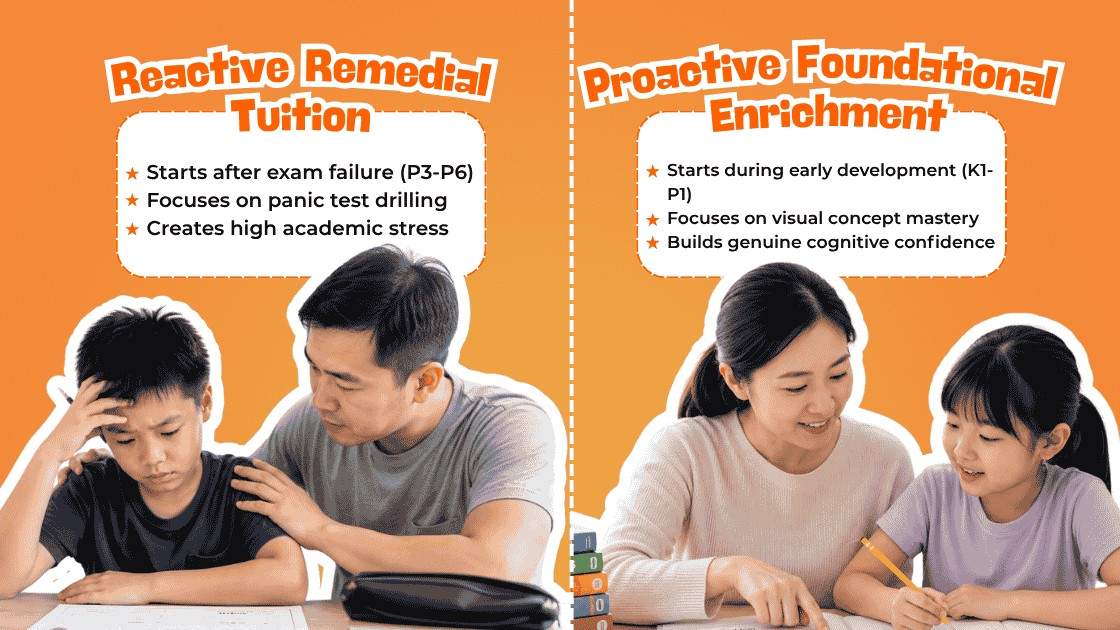
When a parent waits until Primary 3 or 4 to get assistance, the child is already struggling with a deep sense of academic failure. The tutor’s job becomes high-pressure damage control—forcing the child to memorize past exam papers to pass an upcoming school assessment.
In contrast, starting early with foundational enrichment treats math as an engaging language, focusing on deep logic before any exam anxiety sets in.
Why the Kindergarten 1 & 2 Years are the Sweet Spot
When evaluating when to start math tuition in Singapore, cognitive developmental science points clearly to the preschool years—specifically ages 5 and 6 (Kindergarten 1 and 2).
Here is why this early window is incredibly vital:
1. Neuroplasticity and Natural Curiosity
During the preschool ages, a child’s brain is highly adaptable. They are naturally driven to explore patterns, shapes, and sorting. Introducing visual mathematical concepts at this stage allows them to build a highly intuitive “number sense” naturally, without seeing the subject as a stressful chore.
2. Bridging the Massive P1 Syllabus Gap
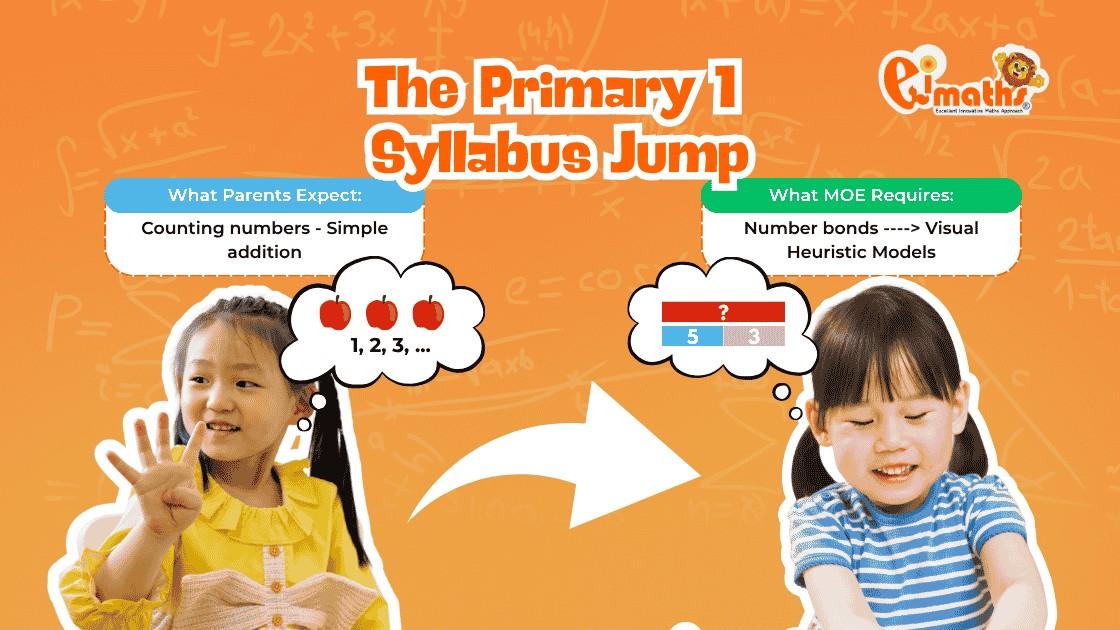
The jump from Kindergarten math to the Ministry of Education (MOE) Primary 1 syllabus is notoriously large. Kindergarten programs often focus on basic counting to 50.
However, Primary 1 math immediately demands complex number bonds, spatial visualization, and word problems. Children who enter P1 without prior conceptual enrichment often experience a shocking loss of academic confidence during their very first term.
How to Choose the Right Program for Early Learners
If you decide to give your preschooler a headstart, remember that they should never be put into a traditional, lecture-style tuition center. Sitting silently at a desk copying formulas will only destroy their curiosity. Young children need an interactive environment built specifically for their developmental stage.
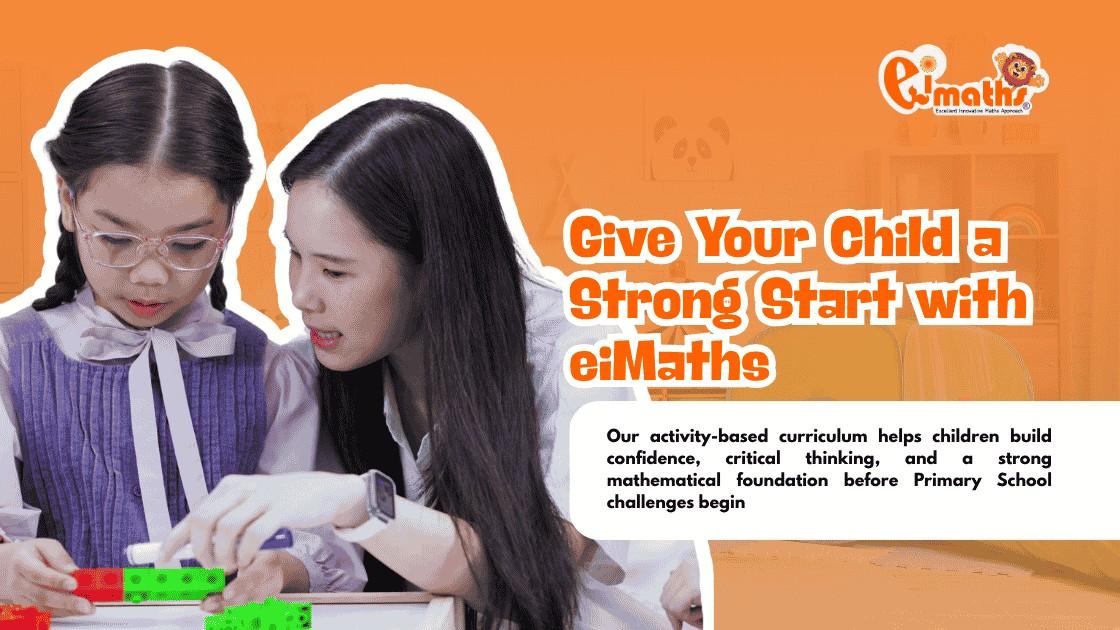
This is exactly why the eiMaths curriculum is structured across a seamless pathway from Kindergarten 1 all the way through Primary 6. For our early learners, we focus entirely on activity-based discovery. We utilize custom physical tools and color-coded materials that let children feel, build, and interact with math principles.
By starting early with eiMaths, you ensure your child steps into primary school with an unshakeable foundation, complete confidence, and a lifelong love for problem-solving.