


Math activities for elementary students do not have to involve endless worksheets or repetitive drills. In fact, some of the most effective math learning happens when children are actively exploring, playing, and solving real-world problems.
Many children develop stronger mathematical understanding when they can connect concepts to meaningful experiences. Whether they are measuring ingredients while baking, calculating scores during games, or solving puzzles with friends, these activities help bring math to life.
The key is to create opportunities for children to see mathematics as something enjoyable and useful rather than simply another school subject. When learning feels engaging, children are more likely to stay curious, develop confidence, and build strong problem-solving skills.
Why Fun Matters in Math Learning
Children learn best when they are actively involved in the learning process. Fun activities increase engagement and encourage children to think more deeply about mathematical concepts.
When children enjoy learning, they are more willing to:
- Try challenging problems
- Explore different solutions
- Learn from mistakes
- Build confidence
- Develop persistence
These habits support long-term success not only in mathematics but across many areas of learning.
The good news is that parents and educators do not need expensive resources to create meaningful math experiences. Many opportunities already exist within everyday life.
1. Create a Family Store
Pretend shopping is one of the easiest ways to develop practical math skills.
Children can create price tags, count money, calculate totals, and determine change. This activity strengthens number sense while helping children understand how math is used in real-world situations.
For younger students, simple addition and subtraction may be enough. Older children can work with larger numbers, discounts, and budgeting challenges.
2. Turn Cooking Into a Math Lesson
Cooking naturally introduces mathematical concepts such as measurement, fractions, estimation, and sequencing.
Children can:
- Measure ingredients
- Compare quantities
- Double recipes
- Estimate cooking times
These experiences help children see that mathematics has practical value beyond the classroom.
Cooking also encourages attention to detail and problem-solving skills.
3. Play Board Games That Use Numbers
Many classic board games provide excellent opportunities for mathematical thinking.
Games that involve counting spaces, managing resources, or calculating scores encourage children to use numbers in meaningful ways.
Children often practise math repeatedly during games without even realising they are learning.
This makes board games one of the most enjoyable educational tools available.
4. Organise a Math Scavenger Hunt
A scavenger hunt can transform learning into an exciting adventure.
Children can search for:
- Shapes around the house
- Objects of specific lengths
- Items that match certain quantities
- Number patterns
This activity encourages observation while reinforcing mathematical concepts.
It also gets children moving and interacting with their environment.
5. Solve Puzzles and Brain Teasers
Puzzles challenge children to think critically and apply logic.
Examples include:
- Sudoku
- Number puzzles
- Logic grids
- Pattern challenges
- Tangrams
These activities help develop reasoning skills and encourage flexible thinking.
They also show children that mathematics is about much more than computation.
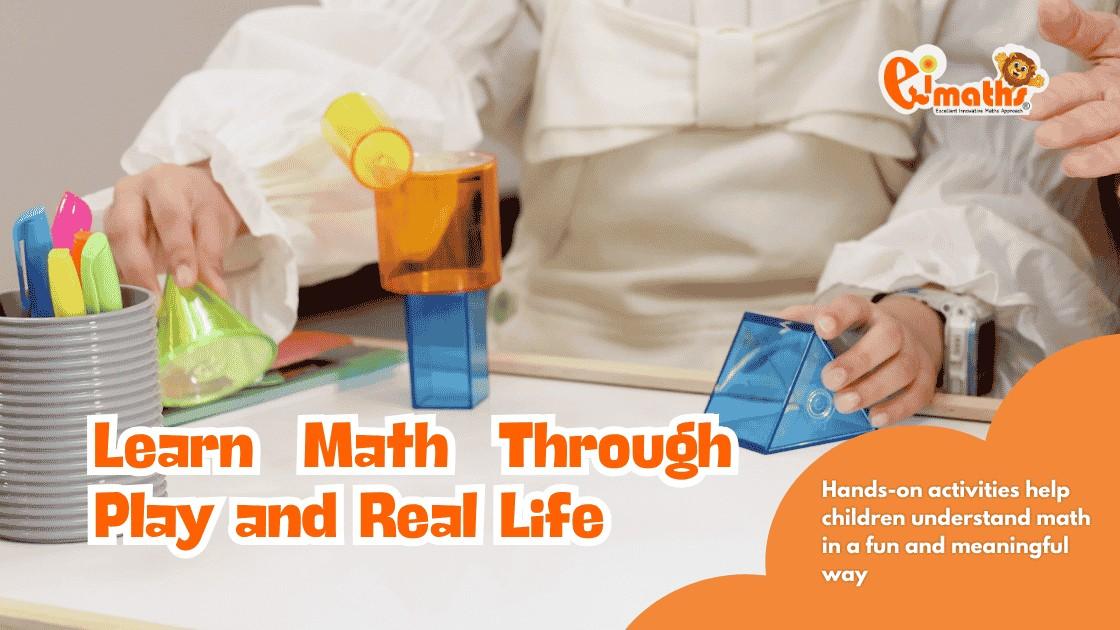
6. Build with Blocks or Construction Toys
Building activities strengthen spatial reasoning, geometry, and problem-solving skills.
When children create structures, they naturally explore concepts such as:
- Balance
- Symmetry
- Measurement
- Shape relationships
Construction activities encourage creativity while supporting mathematical development.
The learning feels natural because children are focused on creating rather than studying.
7. Explore Math Activities for Elementary Students at Home
Many parents look for math activities for elementary students at home that require minimal preparation.
Fortunately, everyday household routines can become valuable learning opportunities.
Children can:
- Count household items
- Compare grocery prices
- Measure furniture
- Organise collections
- Track daily weather patterns
These activities help children recognise that mathematics is present everywhere.
They also encourage independent thinking and observation.
8. Use Sports and Physical Activities
Sports provide numerous opportunities to apply mathematics.
Children can:
- Keep score
- Measure distances
- Compare statistics
- Calculate averages
- Track performance improvements
These activities demonstrate how mathematics supports decision-making and analysis in real-life situations.
For children who enjoy movement, sports can make math especially engaging.
9. Create Real-World Problem-Solving Challenges
One of the most effective ways to strengthen mathematical thinking is through authentic problem-solving.
Parents might ask questions such as:
- How many snacks do we need for everyone?
- How much time do we have before leaving?
- Which option costs less?
- How can we divide these items equally?
These challenges encourage children to apply mathematical reasoning in practical situations.
They also help build confidence because children can see the value of their thinking immediately.
How to Teach Kids Math in a Fun Way
Many parents wonder how to teach kids math in a fun way without turning every activity into a formal lesson.
The answer is surprisingly simple: focus on curiosity rather than correctness.
Children learn more effectively when they are encouraged to explore, ask questions, and experiment with ideas.
Instead of emphasising right answers, try asking:
- What do you notice?
- What do you think will happen?
- Can you find another way?
- How did you figure that out?
These conversations help children develop deeper understanding while keeping learning enjoyable.
Different Activities Support Different Skills
Not all math activities develop the same abilities.
| Activity | Skills Developed |
| Cooking | Measurement, fractions, estimation |
| Board games | Counting, strategy, number sense |
| Puzzles | Logic, reasoning, pattern recognition |
| Shopping games | Addition, subtraction, money skills |
| Building projects | Geometry, spatial reasoning |
| Sports tracking | Data analysis, measurement |
A variety of experiences helps children develop a broad range of mathematical skills.
This balanced approach supports both academic achievement and real-world application.
Building Confidence Through Positive Experiences
One of the greatest benefits of fun math activities is the confidence they help create.
Children who associate mathematics with curiosity and exploration are often more willing to tackle challenging problems. They begin to view mistakes as opportunities to learn rather than signs of failure.
Positive experiences can have a lasting impact on a child’s attitude toward mathematics.
By making learning enjoyable, parents and educators help children develop not only stronger skills but also a healthier mindset.
Conclusion: Making Math Meaningful Every Day
Mathematics becomes much more powerful when children experience it beyond textbooks and worksheets. Through games, puzzles, cooking, building projects, and real-world problem-solving, children can develop essential skills while having fun.
The goal is not simply to improve performance in school. It is to help children see mathematics as a useful, interesting, and rewarding part of everyday life.
At eiMaths, we believe that children learn best when mathematical concepts are engaging, meaningful, and connected to real experiences. Our programmes encourage curiosity, confidence, and deep understanding while helping students develop the skills they need for future success.
With the right activities and encouragement, every child can discover that math is not only important but also enjoyable.