



Effective study habits are not about spending more hours at a desk or completing endless worksheets. For children, successful learning often comes from consistency, structure, and balance. A well-designed daily study routine can help children stay focused, build confidence, and develop a positive attitude toward learning.
Many parents assume that studying means sitting quietly for long periods of time. However, young learners benefit most from routines that include short, focused learning sessions, regular breaks, and opportunities to apply what they have learned in different ways.
The good news is that creating a productive study routine does not need to be complicated. With the right approach, children can develop habits that support academic success while still having plenty of time for play, creativity, and family activities.
Why Daily Study Routines Matter
Children thrive on routine. Predictable schedules help them understand what is expected and reduce the stress that can come from uncertainty.
A structured study routine helps children:
- Build consistency in learning
- Develop independence and responsibility
- Improve focus and concentration
- Strengthen memory and retention
- Reduce last-minute cramming
- Create healthy learning habits for the future
Rather than viewing studying as an occasional task before a test, children begin to see learning as a regular part of daily life.
What Makes a Study Habit Effective?
Many parents ask, what effective study habits actually look like for young children.
Effective study habits are not necessarily the habits that involve the most time. Instead, they are habits that help children learn efficiently and consistently.
Some characteristics of effective study habits include:
- Studying at the same time each day
- Working in a distraction-free environment
- Breaking learning into manageable sessions
- Reviewing previous lessons regularly
- Taking short breaks between activities
- Setting achievable goals
These habits help children stay engaged and prevent learning from feeling overwhelming.
The Ideal Daily Study Routine for Kids
Children do not need hours of studying every day. In fact, shorter and more focused sessions are often more effective.
The goal is to create a rhythm that supports learning without causing burnout.
When children have a consistent and structured routine, they naturally develop effective study habits that make learning feel easier and more manageable. Studying then becomes a natural habit rather than a daily struggle.
Step 1: Create a Dedicated Study Space
The environment plays an important role in learning.
Children do not necessarily need a separate study room, but they do benefit from having a consistent place where they can focus.
A good study area should include:
- Adequate lighting
- Comfortable seating
- Minimal distractions
- Necessary learning materials
- A tidy workspace
A consistent environment helps signal to the brain that it is time to focus and learn.
Step 2: Keep Study Sessions Age-Appropriate
One of the biggest mistakes parents make is expecting young children to study for extended periods.
Children’s attention spans are still developing, so shorter sessions are generally more effective.
The table below provides a simple guideline.
| Age Group | Suggested Focus Time |
| 5-6 years | 15-20 minutes |
| 7-8 years | 20-30 minutes |
| 9-10 years | 30-40 minutes |
| 11-12 years | 40-50 minutes |
These timeframes are not strict rules, but they can help parents create realistic expectations.
Quality of focus is usually more important than the total amount of time spent studying.
Step 3: Balance Review and New Learning
Children learn best when they revisit previously learned concepts while also exploring new material.
A balanced study session might include:
- 10 minutes reviewing previous concepts
- 15 minutes learning something new
- 5 minutes discussing or applying the concept
This approach strengthens memory and helps children make connections between different topics.
For mathematics, regular review is especially important because many concepts build upon earlier skills.
Step 4: Include Active Learning Activities
Children often learn more effectively when they actively participate rather than passively listen or read.
Examples of active learning include:
- Solving problems
- Explaining answers aloud
- Playing educational games
- Using hands-on materials
- Teaching concepts to someone else
Active learning encourages deeper understanding and keeps children engaged.
It also makes studying more enjoyable and meaningful.
Step 5: Build Consistency Over Perfection
Parents sometimes worry when a study routine is not followed perfectly every day.
However, consistency matters far more than perfection.
Missing a session occasionally is not a problem. What matters is returning to the routine and maintaining long-term habits.
Children benefit from seeing studying as a regular practice rather than an all-or-nothing activity.
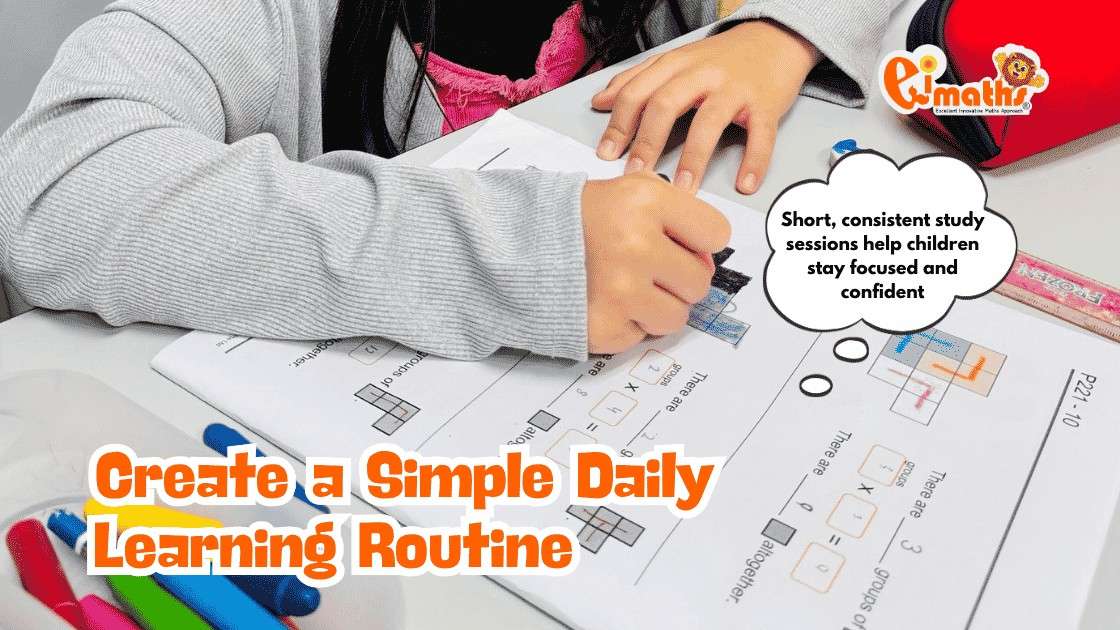
Small, consistent efforts often produce better results than occasional intensive study sessions.
How to Develop Effective Study Habits
Parents often wonder how to develop effective study habits that children will actually maintain.
The key is to start small.
Rather than introducing a strict schedule immediately, begin with one simple habit such as:
- Reading for 15 minutes each day
- Reviewing math concepts after school
- Completing homework at the same time every evening
Once that habit becomes routine, additional habits can be introduced gradually.
Children are more likely to maintain routines that feel manageable and achievable.
What Effective Study Habits Kids at Home Should Focus On
When considering what effective study habits kids at home should develop, it is helpful to focus on habits that support long-term learning rather than short-term results.
Some of the most valuable habits include:
- Managing time effectively
- Staying organised
- Asking questions when confused
- Reviewing learning regularly
- Maintaining a positive attitude toward mistakes
These habits help children become independent learners who can take ownership of their education.
Over time, they also contribute to greater confidence and resilience.
The Role of Rest, Play, and Sleep
An effective study routine is not only about studying.
Children also need time to play, exercise, relax, and sleep.
Research consistently shows that sleep plays an important role in memory formation and learning. Children who are well-rested often find it easier to focus, solve problems, and retain new information.
Likewise, play helps support creativity, emotional development, and cognitive growth.
A balanced routine ensures that children have opportunities to learn while still enjoying childhood.

Conclusion: Helping Children Build Habits for Lifelong Learning
Developing strong study habits is one of the most valuable investments parents can make in their child’s education. A structured daily routine helps children build consistency, improve focus, and develop confidence in their abilities.
The goal is not to create perfect students or fill every moment with academic work. Instead, it is to establish sustainable habits that make learning feel manageable, productive, and enjoyable.
At eiMaths, we believe that successful learning begins with strong foundations and positive habits. By helping children develop effective study habits through engaging lessons, structured support, and age-appropriate learning experiences, we equip them with the skills and confidence they need to thrive academically.
With the right routine and encouragement, children can build learning habits that support their success not only in school, but throughout their lives.